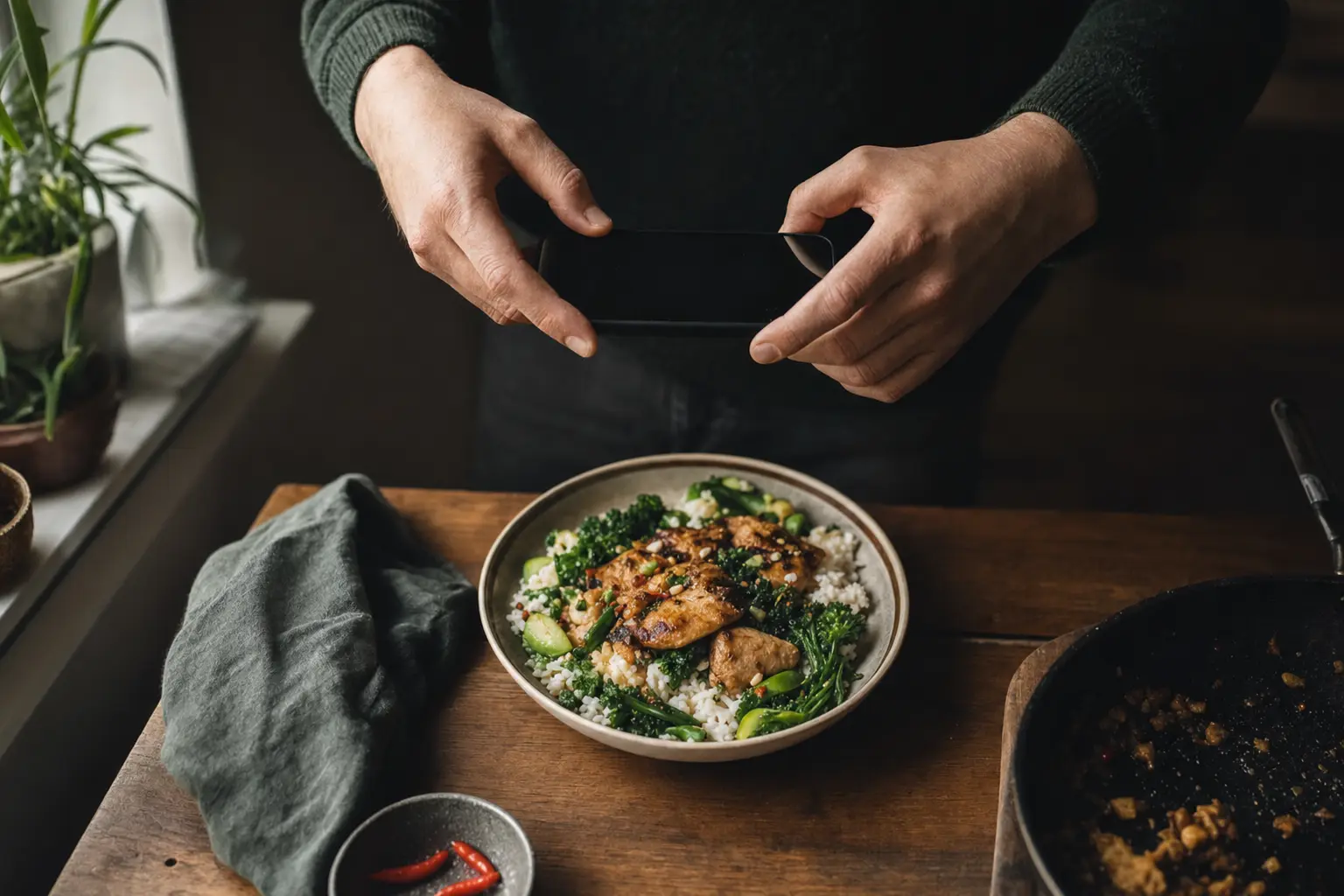
 AI-generated image
Guides · Food and nutrition · Updated 2026-10-28
Can you track calories with just a photo?
Yes, roughly. In recent studies, AI models estimated a meal's calories from a photo alone with an average error of about 30 to 36%, close to how far off people usually are when they write down what they ate. Listing the ingredients and rough amounts along with the photo cut the error to about 14%. A photo of a nutrition label is better still, because the AI reads the exact numbers instead of guessing.
How photo calorie tracking works
You take a picture of your plate. An AI model looks at it, works out what the foods probably are and how much of each there is, then adds up the calories and macros. It’s the same guess you’d make by eye, done in a few seconds.
The hard part isn’t naming the food. It’s the amount. A photo is flat, so the AI has to judge how deep a bowl is or how thick a steak is from one angle. It also can’t see the oil in the pan or the dressing under the salad.
How accurate it is
Two 2025 studies give a good picture.
| Study | What the AI saw | Average calorie error |
|---|---|---|
| Three AI models, 52 meal photos | Photo only | About 36% for the best two |
| ChatGPT-5, 195 dishes | Photo only | About 31% |
| ChatGPT-5, 195 dishes | Photo plus a short description | About 24% |
| ChatGPT-5, 195 dishes | Photo plus ingredients and amounts | About 14% |
In the first study, ChatGPT and Claude did best, and the authors noted they came close to the accuracy of traditional food diaries, where people write down what they ate. People are far from perfect at that, too. They also found every model underestimated big portions, and the bigger the plate, the lower the guess.
In the second study, errors were largest for food in bowls, where depth is hard to see. Leaving the photo out and sending only the ingredient list made the estimate worse, so the picture does help.
How to get a better estimate
- Add a sentence. “Chicken thigh, about a cup of rice, cooked in a tablespoon of oil” makes the biggest difference of anything here.
- Shoot from above and a little to the side, with the whole plate in frame. A fork or your hand next to it helps with size.
- Mention what’s hidden. Oil, butter, sauces and dressings carry a lot of calories and barely show.
- Photograph the label for anything packaged. The AI reads the exact numbers, and you just say how much you ate.
When a photo isn’t enough
Photo estimates are good for the everyday meals you eat often and can’t weigh. They’re less reliable for big portions and for restaurant food made with a lot of oil.
If you’re tracking closely, for example near the end of a cut, weigh the foods you eat most for a week or two. You’ll learn what your usual portions look like, and your photo descriptions get better. Our guide to counting calories without a scale has more ways to estimate.
Either way, the number on one day matters less than your trend. If your weekly average weight isn’t moving the way you expect, adjust your calories a little and give it two more weeks.
Also asked
How accurate are AI calorie counters?
From a photo alone, studies of ChatGPT and Claude found average errors of about 30 to 36% for a meal's calories. With a short description of the ingredients and amounts, error dropped to about 14% in one 2025 study.
Do AI calorie counters overestimate or underestimate?
They tend to underestimate, and more so for big portions. In a 2025 study of three AI models, all of them guessed low on larger servings. The gap grew with the portion size.
What foods are hardest for an AI to estimate from a photo?
Food in bowls and mixed dishes like stews and curries. Hidden oil and dressing are hard too. A photo can't show depth or what's underneath, so add a few words about those.
Is a photo good enough for losing weight?
For most people, yes. What matters most is logging consistently and watching your weekly weight trend. If the trend doesn't move as expected, check your portions for a week with a scale.
Can AI read a nutrition label from a photo?
Yes, and that's the most accurate photo you can take. The AI reads the label's numbers, so you only need to say how much of the package you ate.